Comparison
Quartzite vs Quartz Countertops: Natural Stone or Engineered?
Updated October 26, 2026 · Enchanted Kitchens, Stamford, CT
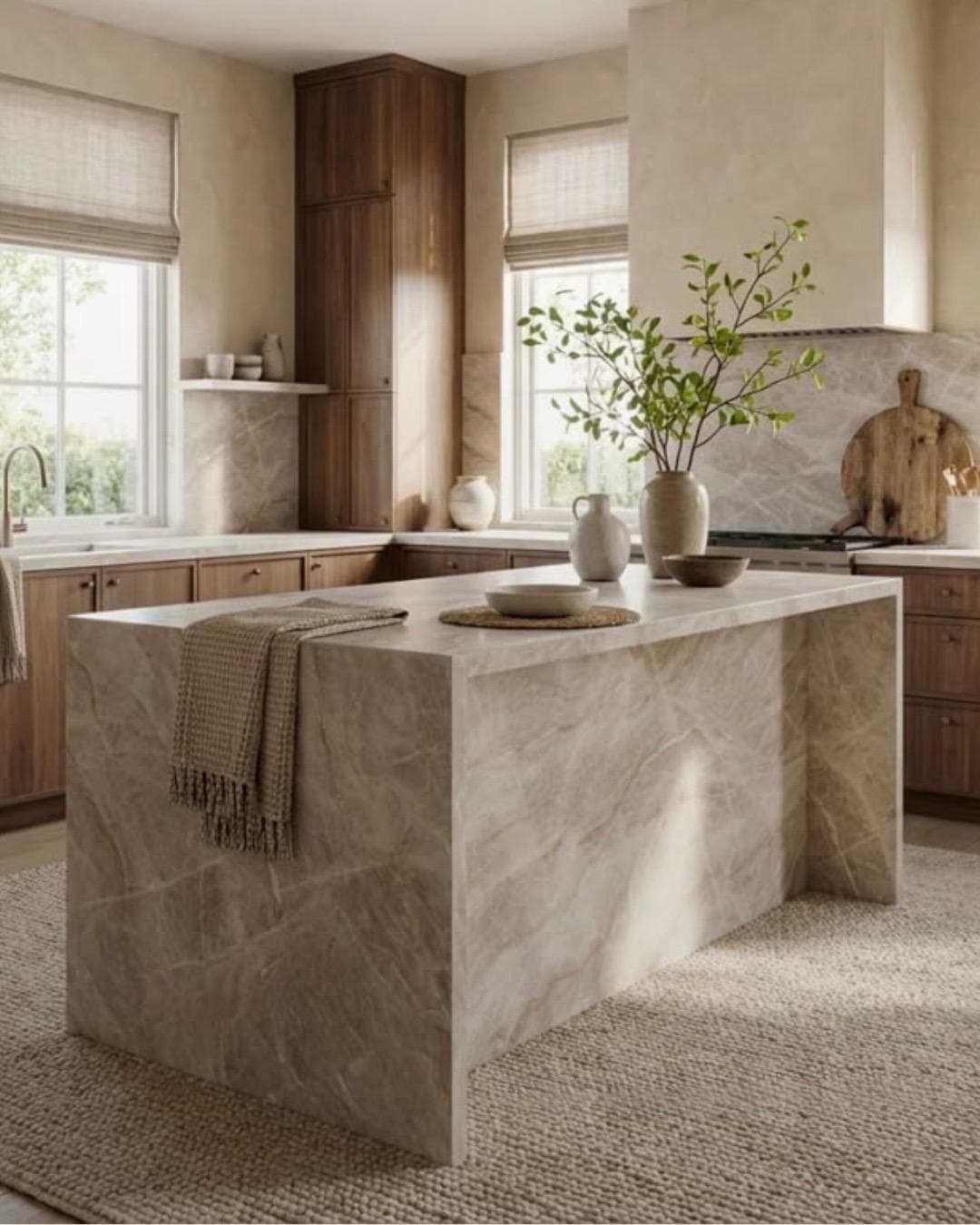
Quick answer
Quartzite is a natural stone. Quartz is engineered from crushed quartz and resin. Quartzite handles heat and sun better and every slab is one of a kind, but it needs sealing. Quartz never needs sealing and resists stains better, but it does not like hot pans or direct sun. If you want the marble look with real toughness, look at quartzite. If you want the easiest surface to live with, look at quartz.
The names are almost the same, and that is where most of the confusion starts. Quartzite and quartz are not two versions of one material. One comes out of a quarry. The other comes out of a factory.
Both are excellent kitchen counters. They just ask different things of you, and the right one depends on how you cook, how much sun your kitchen gets, and whether you want a stone that is perfectly even or one that nobody else has.
Quartzite vs quartz at a glance
| Feature | Quartzite | Quartz |
|---|---|---|
| What it is | Natural stone, quarried and cut into slabs | Engineered: about 90% crushed quartz plus resin and pigment |
| Look | One of a kind veining, often marble-like | Even, predictable pattern from slab to slab |
| Sealing | Yes, it is sealed when installed and resealed over time | Never |
| Stains | Resists well once sealed; wipe spills up | Non-porous, resists stains very well |
| Heat | Handles hot cookware well | Resin can scorch; use a trivet |
| Sun and outdoors | Fine outdoors and in full sun | Indoors only for most brands; UV can yellow the resin |
| Scratches | Very hard, among the hardest counter stones | Very hard, resists everyday scratches |
What is the difference between quartzite and quartz?
Quartzite is sandstone that heat and pressure turned, over a very long time, into a dense, hard natural stone. It is quarried in blocks, sliced into slabs and polished. Nothing is added. Every slab has its own veining, and many quartzites look like marble.
Quartz is an engineered stone. Natural quartz is crushed, mixed with resin and color, and pressed into slabs. The quartz gives it hardness. The resin holds it together and makes it non-porous. That resin is the reason quartz never needs sealing, and also the reason it is careful with heat and sun.
So the short version: natural vs engineered. Almost every difference that matters in a kitchen comes from that.
Is quartzite more durable than quartz?
It depends on what you mean by durable. Against heat and sunlight, yes: quartzite is stone all the way through, so a hot pan or a sunny window does not bother it. Against stains, quartz has the edge, because it is non-porous and quartzite is not.
On scratches, both are very hard and stand up to normal kitchen life. Either one can chip at a sharp edge from a heavy knock, which is why an eased or rounded edge is a good choice on a busy island.
The honest way to think about it: quartzite forgives heat, quartz forgives spills. Choose the one that forgives the mistakes your household actually makes.
Engineered vs natural stone: the look
Quartz is consistent. If you want a clean white counter that looks the same on the island and the perimeter, quartz gives you that without any surprises.
Quartzite is singular. The slab you pick is the slab you get, with movement and depth that a pattern cannot copy. That is why we have you approve your actual slab, and see where the seams will fall, before anything is cut.
Does quartzite need to be sealed every year?
Not usually. Quartzite is sealed when it is installed, and how often it needs resealing depends on the stone and how the kitchen is used. Many quartzites hold a seal for a long time.
There is an easy test: put a few drops of water on the counter in a spot you use a lot. If it beads up, the seal is working. If it darkens the stone after a few minutes, it is time to reseal. Quartz skips this step entirely.
Quartzite countertop maintenance, day to day
- Wipe up spills, especially oil, wine and coffee, instead of leaving them overnight.
- Clean with warm water and a mild dish soap. Skip bleach, vinegar and abrasive powders.
- Use a cutting board. The stone will survive a knife, but your knives will not survive the stone.
- Reseal when water stops beading.
Watch out for mislabeled quartzite
Some stones sold as quartzite are softer stones that behave more like marble and can etch from lemon or vinegar. If you are choosing quartzite for toughness, ask to test a sample: leave a little lemon juice on it for a few minutes. True quartzite keeps its shine. If the spot goes dull, it is not the stone you are paying for.
Which one should you choose?
- Choose quartzite if you love the marble look, you cook a lot with hot pans, the kitchen gets strong sun, or the counter is going outdoors.
- Choose quartz if you want zero sealing, an even look, and the most stain-resistant surface for a busy family kitchen.
How the project runs with us
We cut quartzite and quartz in our own Stamford shop, and one team owns the job from the first measurement to the install. You see your slab before we cut it, and you get one all-inclusive price in writing before we start. Removal of your old counters is quoted separately.
Installation takes a single day, 1 to 2 weeks after we measure. Your old counters stay in place until that morning, so you keep cooking the whole time. Every project carries a one year workmanship warranty.
Weighing marble too? Read quartzite vs marble or the full four-stone comparison.
Common questions
Is quartzite the same as quartz?
No. Quartzite is a natural stone cut from a quarry. Quartz is an engineered surface made from crushed quartz bound with resin. They share a mineral, not a manufacturing process.
Which is more expensive, quartzite or quartz?
It depends on the slab more than the material. Both come in a wide range, from everyday colors to rare, dramatic slabs. Our online estimate gives you a ballpark for your kitchen in about a minute.
Is quartzite more durable than quartz?
Quartzite handles heat and sunlight better. Quartz handles stains better because it is non-porous. Both resist everyday scratches very well.
Does quartzite need to be sealed?
Yes. It is sealed at installation and resealed when water stops beading on the surface, which for many quartzites is not every year. Quartz never needs sealing.
Can I put a hot pan on quartzite or quartz?
Quartzite handles hot cookware well, though a trivet is still a good habit. On quartz, always use a trivet: very hot pans can scorch the resin, and that mark does not come out.
Where can I see quartzite and quartz slabs near Stamford, CT?
At our showroom in Stamford, by appointment. We serve Fairfield County, CT and Westchester County, NY, and you approve your actual slab before anything is cut.
Free consultation
See quartzite and quartz side by side
Get a ballpark on the screen in about a minute, or call and we will walk you through both stones at our Stamford showroom.